





Energy storage has become the hottest topic and industry, and LiFePO4 batteries have become the core chemistry of energy storage systems due to their high cycling, long life, greater stability and green credentials. Among the various types of LiFePO4 batteries, 48V and 51.2V batteries are often compared, especially in residential and commercial applications. In this article, we’ll delve into the key differences between these two voltage options and walk you through how to choose the right battery for your specific needs.
Explaining Battery Voltage
Before we discuss the differences between 48V and 51.2V LiFePO4 batteries, let’s understand what battery voltage is. Voltage is the physical quantity of potential difference, which indicates the amount of potential energy. In a battery, the voltage determines the amount of power with which the current flows. The standard voltage of a battery is typically 3.2V (e.g. LiFePO4 batteries), but other voltage specifications are available.
Battery voltage is a very important metric in energy storage systems and determines how much power the storage battery can provide to the system. In addition, it affects the compatibility of the LiFePO4 battery with other components in the energy storage system, such as the inverter and charge controller.
In energy storage applications, the battery voltage design is routinely defined as 48V and 51.2V.
What is the difference between 48V and 51.2V LiFePO4 batteries?
The Rated Voltage Is Different:
48V LiFePO4 batteries are usually rated at 48V, with a charge cut-off voltage of 54V~54.75V and a discharge cut-off voltage of 40.5-42V.
51.2V LiFePO4 batteries usually have a rated voltage of 51.2V, with a charge cut-off voltage of 57.6V~58.4V and a discharge cut-off voltage of 43.2-44.8V.
The Number of Cells Is Different:
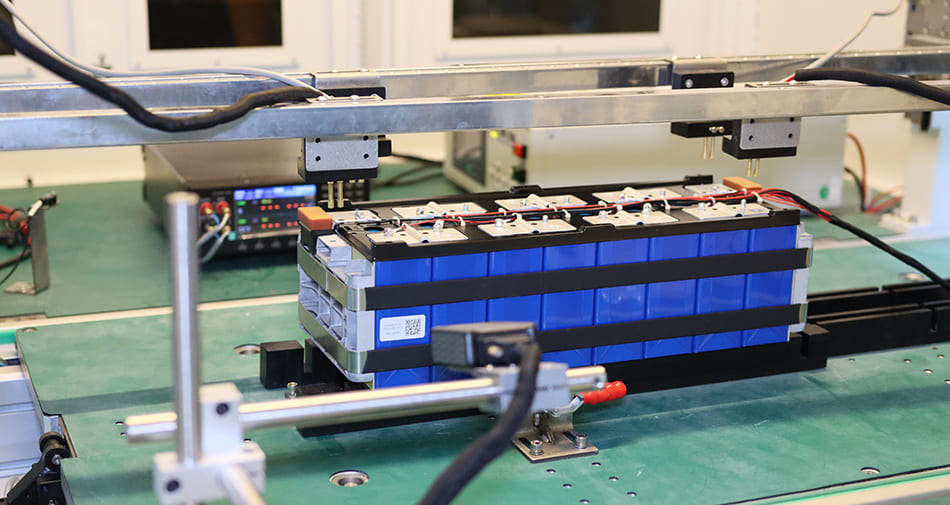
48V LiFePO4 batteries are usually composed of 15 3.2V LiFePO4 batteries through 15S; while 51.2V LiFePO4 batteries are usually composed of 16 3.2V LiFePO4 batteries through 16S.
The Application Scenarios Are Different:
Even the slight voltage difference will make the lithium iron phosphate in the application of the choice has a big difference, the same will make them have different advantages:
48V Li-FePO4 batteries are commonly used in off-grid solar systems, small residential energy storage and backup power solutions. They are often favored due to their wide availability and compatibility with a variety of inverters.
51.2V Li-FePO4 batteries are becoming increasingly popular in high-performance applications that require higher voltage and efficiency. These applications include large-scale energy storage systems, industrial applications and electric vehicle power supplies.
However, due to the advances in Li-FePO4 technology and decreasing costs, in order to pursue the high efficiency of photovoltaic systems, off-grid solar systems, small residential energy storage are now also converted to Li-FePO4 batteries using 51.2V voltage systems.
48V and 51.2V Li-FePO4 Battery Charge and Discharge Characteristics Comparison
Voltage difference will affect the charging and discharging behavior of the battery, so we mainly compare 48V and 51.2V LiFePO4 batteries in terms of three important indexes: charging efficiency, discharging characteristics and energy output.
1. Charging Efficiency
Charging efficiency refers to the ability of the battery to effectively store energy during the charging process. The voltage of the battery has a positive effect on the charging efficiency, the higher the voltage, the higher the charging efficiency, as shown below:
Higher voltage means less current used for the same charging power. Smaller current can effectively reduce the heat generated by the battery during operation, thus reducing energy loss and allowing more power to be stored in the battery.
Therefore, 51.2V Li-FePO4 battery will have more advantages in fast charging applications, which is why it is more suitable for high-capacity or high-frequency charging application scenarios, such as: commercial energy storage, electric vehicle charging and so on.
Comparatively speaking, although the charging efficiency of 48V Li-FePO4 battery is a little bit lower, it can still maintain at a higher level than other types of electrochemical technology such as lead-acid batteries, so it still performs well in other scenarios such as home energy storage system, UPS and other power backup systems.
2. Discharge Characteristics
Discharge characteristics refer to the performance of the battery when releasing the stored energy to the load, which directly affects the stability and efficiency of the system operation. The discharge characteristics are determined by the discharge curve of the battery, the size of the discharge current and the durability of the battery:
51.2V LiFePO4 cells are usually able to discharge stably at higher currents due to their higher voltage. The higher voltage means that each cell carries a smaller current load, which reduces the risk of overheating and over-discharge. This feature makes 51.2V batteries especially good in applications that require high power output and long stable operation, such as commercial energy storage, industrial equipment, or power-hungry power tools.
3. Energy Output
Energy output is a measure of the total amount of energy that a battery can supply to a load or electrical system in a given period of time, which directly affects the available power and range of the system. The voltage and energy density of the battery are two key factors that affect the energy output.
51.2V LiFePO4 batteries provide a higher energy output than 48V LiFePO4 batteries, mainly in the composition of the battery module, 51.2V batteries have an additional cell, which means that he can store a little more capacity, for example:
48V 100Ah lithium iron phosphate battery, storage capacity = 48V * 100AH = 4.8kWh
51.2V 100Ah lithium iron phosphate battery, storage capacity = 51.2V * 100Ah = 5.12kWh
Although the energy output of a single 51.2V battery is only 0.32kWh more than that of a 48V battery, but the change in quality will cause a quantitative change, 10 51.2V batteries will be 3.2kWh more than that of a 48V battery; 100 51.2V batteries will be 32kWh more than that of a 48V battery.
So for the same current, the higher the voltage, the greater the energy output of the system. This means that 51.2V batteries are able to provide more power support in a short period of time, which is suitable for a longer period of time, and can satisfy a greater energy demand. 48V batteries, although their energy output is a little less, but they are sufficient to cope with the use of daily loads in a household.
System Compatibility
Whether it is a 48V Li-FePO4 battery or a 51.2V Li-FePO4 battery, compatibility with the inverter needs to be considered when selecting a complete solar system.
Typically, the specifications for inverters and charge controllers usually list a specific battery voltage range. If your system is designed for 48V, then both 48V and 51.2V batteries will generally work, but performance may vary depending on how well the battery voltage matches the system.
The majority of BSLBATT’s solar cells are 51.2V, but are compatible with all 48V off-grid or hybrid inverters on the market.
Price and cost-effectiveness
In terms of cost, 51.2V batteries are definitely more expensive than 48V batteries, but in recent years, the price difference between the two has been very small due to the decreasing cost of lithium iron phosphate materials.
However, because 51.2V has more output efficiency and storage capacity, 51.2V batteries will have a shorter payback time in the long run.
Future trends in battery technology
Due to the unique advantages of Li-FePO4, 48V and 51.2V will continue to play an important role in the future of energy storage, especially as the demand for renewable energy integration and off-grid power solutions grows.
But higher voltage batteries with improved efficiency, safety and energy density are likely to become more common, driven by the need for more powerful and scalable energy storage solutions. At BSLBATT, for example, we have launched a full range of high-voltage batteries (system voltages in excess of 100V) for residential and commercial/industrial energy storage applications.
Conclusion
Both 48V and 51.2V Li-FePO4 batteries have their own distinct advantages, and the choice will depend on your energy needs, system configuration and cost budget. However, understanding the differences in voltage, charging characteristics and application suitability in advance will help you make an informed decision based on your energy storage needs.
If you are still confused about your solar system, contact our sales engineering team and we will advise you on your system configuration and battery voltage selection.
Frequently Asked Questions (FAQ)
1. Can I replace my existing 48V Li-FePO4 battery with a 51.2V Li-FePO4 battery?
Yes, in some cases, but make sure that your solar system components (such as the inverter and charge controller) can handle the voltage difference.
2. Which battery voltage is more suitable for solar energy storage?
Both 48V and 51.2V batteries work well for solar storage, but if efficiency and fast charging are a priority, 51.2V batteries may offer better performance.
3. Why is there a difference between 48V and 51.2V batteries?
The difference comes from the nominal voltage of the lithium iron phosphate battery. Typically a battery labeled 48V has a nominal voltage of 51.2V, but some manufacturers round this up for simplicity.
Post time: Sep-18-2024