





Are you wondering how to maximize the performance and life of your LiFePO4 battery? The answer lies in understanding the optimal temperature range for LiFePO4 batteries. Known for their high energy density and long cycle life, LiFePO4 batteries are sensitive to temperature fluctuations. But don’t worry – with the right knowledge, you can keep your battery running at peak efficiency.
LiFePO4 batteries are a type of lithium-ion battery that are becoming increasingly popular for their safety features and excellent stability. However, like all batteries, they also have an ideal operating temperature range. So what exactly is this range? And why is it important? Let’s take a deeper look.
The optimal operating temperature range for LiFePO4 batteries is generally between 20°C and 45°C (68°F to 113°F). Within this range, the battery can deliver its rated capacity and maintain a consistent voltage. BSLBATT, a leading LiFePO4 battery manufacturer, recommends keeping batteries within this range for optimal performance.
But what happens when the temperature deviates from this ideal zone? At lower temperatures, the battery’s capacity decreases. For example, at 0°C (32°F), a LiFePO4 battery may only deliver about 80% of its rated capacity. On the other hand, high temperatures can accelerate battery degradation. Operating above 60°C (140°F) can significantly reduce the life of your battery.
Curious about how temperature affects your LiFePO4 battery? Curious about best practices for temperature management? Stay tuned as we dive deeper into these topics in the following sections. Understanding the temperature range of your LiFePO4 battery is key to unlocking its full potential—are you ready to become a battery expert?
Optimal Operating Temperature Range for LiFePO4 Batteries
Now that we understand the importance of temperature for LiFePO4 batteries, let’s take a closer look at the optimal operating temperature range. What exactly happens within this “Goldilocks zone” for these batteries to perform at their best?
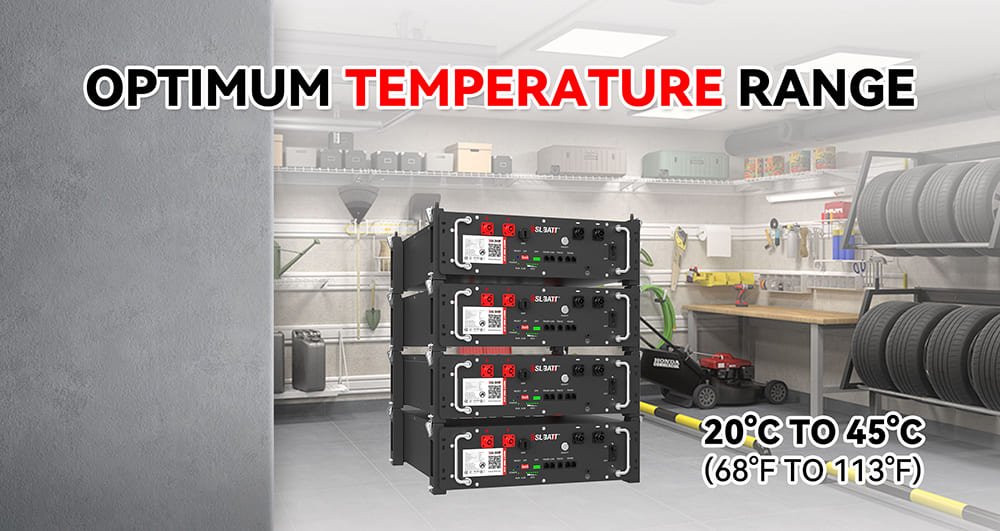
As mentioned earlier, the ideal temperature range for LiFePO4 batteries is 20°C to 45°C (68°F to 113°F). But why is this range so special?
Within this temperature range, several key things happen:
1. Maximum capacity: The LiFePO4 battery delivers its full rated capacity. For example, a BSLBATT 100Ah battery will reliably deliver 100Ah of usable energy.
2. Optimal efficiency: The battery’s internal resistance is at its lowest, allowing for efficient energy transfer during charging and discharging.
3. Voltage stability: The battery maintains a steady voltage output, which is critical for powering sensitive electronics.
4. Extended life: Operating within this range minimizes stress on battery components, helping to achieve the 6,000-8,000 cycle life expected of LiFePO4 batteries.
But what about performance at the edge of this range? At 20°C (68°F), you may see a slight drop in usable capacity—perhaps 95-98% of rated capacity. As temperatures approach 45°C (113°F), efficiency may start to decline, but the battery will still function properly.
Interestingly, some LiFePO4 batteries, like those from BSLBATT, can actually exceed 100% of their rated capacity at temperatures around 30-35°C (86-95°F). This “sweet spot” can provide a small performance boost in certain applications.
Are you wondering how to keep your battery within this optimal range? Stay tuned for our tips on temperature management strategies. But first, let’s explore what happens when a LiFePO4 battery is pushed beyond its comfort zone. How do extreme temperatures affect these powerful batteries? Let’s find out in the next section.
Effects of High Temperature on LiFePO4 Batteries
Now that we understand the optimal temperature range for LiFePO4 batteries, you may be wondering: What happens when these batteries overheat? Let’s take a deeper look at the effects of high temperatures on LiFePO4 batteries.
What are the consequences of operating above 45°C (113°F)?
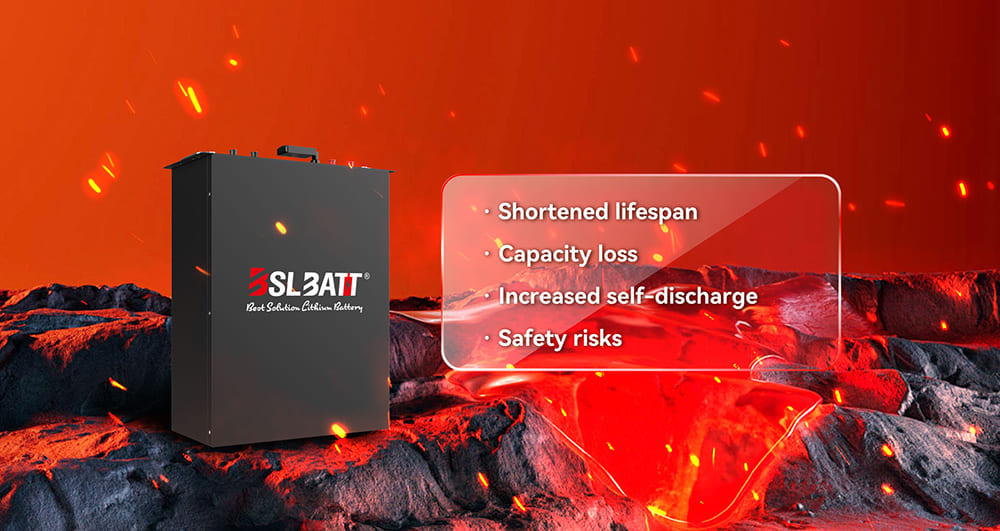
1. Shortened Lifespan: Heat accelerates chemical reactions inside the battery, causing battery performance to degrade faster. BSLBATT reports that for every 10°C (18°F) increase in temperature above 25°C (77°F), the cycle life of LiFePO4 batteries can decrease by up to 50%.
2. Capacity Loss: High temperatures can cause batteries to lose capacity more quickly. At 60°C (140°F), LiFePO4 batteries can lose up to 20% of their capacity in just one year, compared to only 4% at 25°C (77°F).
3. Increased Self-Discharge: Heat accelerates the self-discharge rate. BSLBATT LiFePO4 batteries typically have a self-discharge rate of less than 3% per month at room temperature. At 60°C (140°F), this rate may double or triple.
4. Safety Risks: While LiFePO4 batteries are renowned for their safety, extreme heat still poses risks. Temperatures above 70°C (158°F) can trigger thermal runaway, which could result in fire or explosion.
How to protect your LiFePO4 battery from high temperatures?
- Avoid direct sunlight: Never leave your battery in a hot car or in direct sunlight.
- Use proper ventilation: Ensure there is good airflow around the battery to dissipate heat.
- Consider active cooling: For high-demand applications, BSLBATT recommends using fans or even liquid cooling systems.
Remember, knowing the temperature range of your LiFePO4 battery is critical to maximizing performance and safety. But what about low temperatures? How do they affect these batteries? Stay tuned as we explore the chilling effects of low temperatures in the next section.
Cold Weather Performance of LiFePO4 Batteries
Now that we’ve explored how high temperatures affect LiFePO4 batteries, you may be wondering: what happens when these batteries face a cold winter? Let’s take a deeper look at the cold weather performance of LiFePO4 batteries.
How Do Cold Temperatures Affect LiFePO4 Batteries?
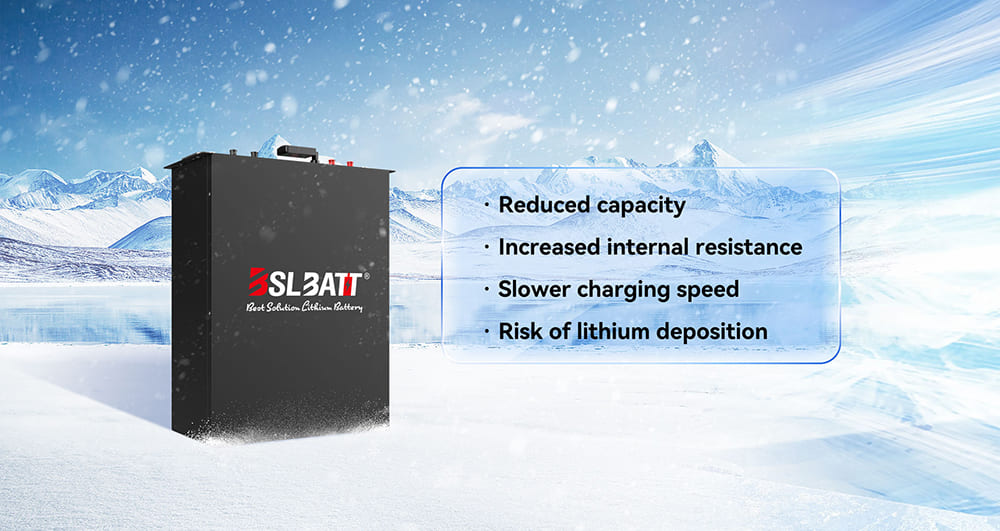
1. Reduced capacity: When temperatures drop below 0°C (32°F), the usable capacity of a LiFePO4 battery decreases. BSLBATT reports that at -20°C (-4°F), the battery may only deliver 50-60% of its rated capacity.
2. Increased internal resistance: Cold temperatures cause the electrolyte to thicken, which increases the battery’s internal resistance. This results in a drop in voltage and reduced power output.
3. Slower charging: In cold conditions, the chemical reactions inside the battery slow down. BSLBATT suggests that charging times may double or triple in subfreezing temperatures.
4. Lithium deposition risk: Charging a very cold LiFePO4 battery may cause lithium metal to deposit onto the anode, potentially permanently damaging the battery.
But it’s not all bad news! LiFePO4 batteries actually perform better in cold weather than other lithium-ion batteries. For example, at 0°C (32°F), BSLBATT’s LiFePO4 batteries can still deliver about 80% of their rated capacity, while a typical lithium-ion battery might only reach 60%.
So, how do you optimize the performance of your LiFePO4 batteries in cold weather?
- Insulation: Use insulating materials to keep your batteries warm.
- Preheat: If possible, warm your batteries to at least 0°C (32°F) before use.
- Avoid fast charging: Use slower charging speeds in cold conditions to prevent damage.
- Consider battery heating systems: For extremely cold environments, BSLBATT offers battery heating solutions.
Remember, understanding the temperature range of your LiFePO4 batteries isn’t just about heat—cold weather considerations are just as important. But what about charging? How does temperature affect this critical process? Stay tuned as we explore temperature considerations for charging LiFePO4 batteries in the next section.
Charging LiFePO4 Batteries: Temperature Considerations
Now that we’ve explored how LiFePO4 batteries perform in hot and cold conditions, you may be wondering: What about charging? How does temperature affect this critical process? Let’s take a deeper look at the temperature considerations for charging LiFePO4 batteries.
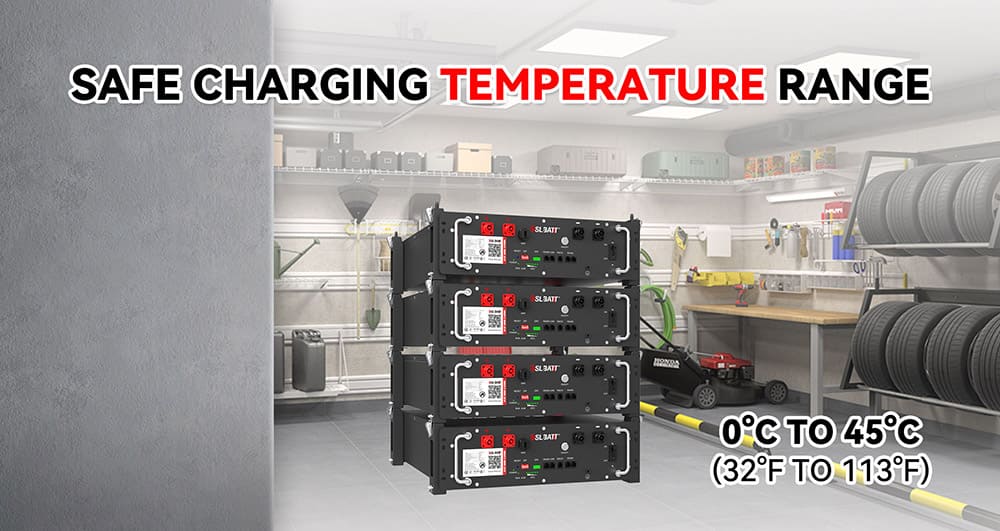
What is the Safe Charging Temperature Range for LiFePO4 Batteries?
According to BSLBATT, the recommended charging temperature range for LiFePO4 batteries is 0°C to 45°C (32°F to 113°F). This range ensures optimal charging efficiency and battery life. But why is this range so important?
| At Lower Temperatures | At Higher Temperatures |
| Charging efficiency drops significantly | Charging may become unsafe due to increased risk of thermal runaway |
| Increased risk of lithium plating | Battery life may be shortened due to accelerated chemical reactions |
| Increased likelihood of permanent battery damage |
So what happens if you charge outside of this range? Let’s look at some data:
- At -10°C (14°F), charging efficiency may drop to 70% or less
- At 50°C (122°F), charging may damage the battery, reducing its cycle life by up to 50%
How do you ensure safe charging at different temperatures?
1. Use temperature-compensated charging: BSLBATT recommends using a charger that adjusts voltage and current based on battery temperature.
2. Avoid fast charging in extreme temperatures: When it’s very hot or very cold, stick to slower charging speeds.
3. Warm up cold batteries: If possible, bring the battery to at least 0°C (32°F) before charging.
4. Monitor battery temperature during charging: Use the temperature acquisition capabilities of your BMS to monitor battery temperature changes.
Remember, knowing the temperature range of your LiFePO4 battery is critical not only for discharge, but also for charging. But what about long-term storage? How does temperature affect your battery when it’s not in use? Stay tuned as we explore storage temperature guidelines in the next section.
Storage Temperature Guidelines for LiFePO4 Batteries
We’ve explored how temperature affects LiFePO4 batteries during operation and charging, but what about when they’re not in use? How does temperature affect these powerful batteries during storage? Let’s dive into the storage temperature guidelines for LiFePO4 batteries.
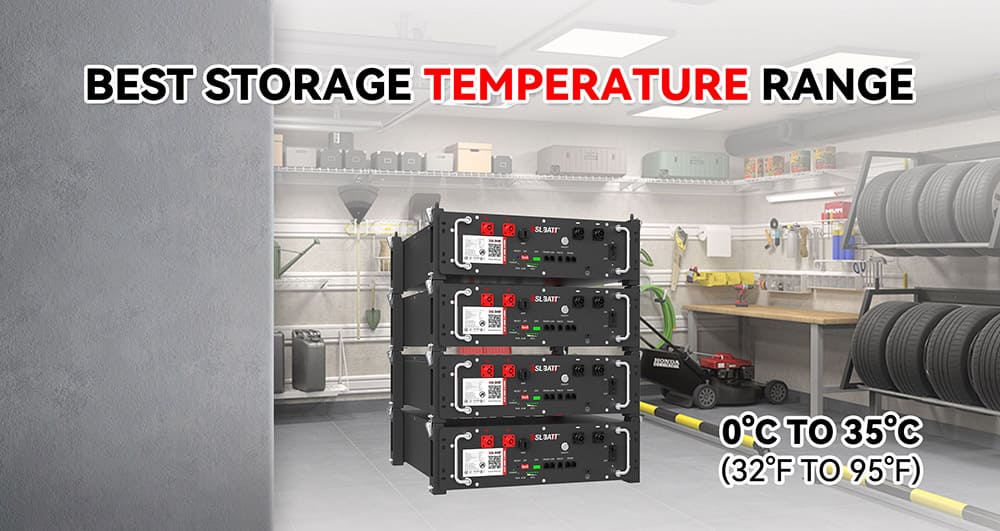
What is the ideal storage temperature range for LiFePO4 batteries?
BSLBATT recommends storing LiFePO4 batteries between 0°C and 35°C (32°F and 95°F). This range helps minimize capacity loss and maintain the overall health of the battery. But why is this range so important?
| At Lower Temperatures | At Higher Temperatures |
| Increased self-discharge rate | Increased risk of electrolyte freezing |
| Accelerated chemical degradation | Increased likelihood of structural damage |
Let’s look at some data on how storage temperature affects capacity retention:
| Temperature Range | Self-discharge Rate |
| At 20°C (68°F) | 3% of capacity per year |
| At 40°C (104°F) | 15% per year |
| At 60°C (140°F) | 35% of capacity in just a few months |
What about the state of charge (SOC) during storage?
BSLBATT recommends:
- Short-term storage (less than 3 months): 30-40% SOC
- Long-term storage (more than 3 months): 40-50% SOC
Why these specific ranges? A moderate state of charge helps prevent over-discharge and voltage stress on the battery.
Are there any other storage guidelines to keep in mind?
1. Avoid temperature fluctuations: A steady temperature works best for LiFePO4 batteries.
2. Store in a dry environment: Moisture can damage battery connections.
3. Check battery voltage regularly: BSLBATT recommends checking every 3-6 months.
4. Recharge if voltage drops below 3.2V per cell: This prevents over-discharge during storage.
By following these guidelines, you can ensure your LiFePO4 batteries stay in top condition even when not in use. But how do we proactively manage battery temperature in various applications? Stay tuned as we explore temperature management strategies in the next section.
Temperature Management Strategies for LiFePO4 Battery Systems
Now that we’ve explored the ideal temperature ranges for LiFePO4 batteries during operation, charging, and storage, you may be wondering: How do we actively manage battery temperature in real-world applications? Let’s dive into some effective temperature management strategies for LiFePO4 battery systems.
What are the main approaches to thermal management for LiFePO4 batteries?
1. Passive Cooling:
- Heat Sinks: These metal parts help dissipate heat from the battery.
- Thermal Pads: These materials improve heat transfer between the battery and its surroundings.
- Ventilation: Proper airflow design can significantly help dissipate heat.
2. Active Cooling:
- Fans: Forced air cooling is very effective, especially in enclosed spaces.
- Liquid Cooling: For high-power applications, liquid cooling systems provide superior thermal management.
3. Battery Management System (BMS):
A good BMS is critical for temperature regulation. BSLBATT’s advanced BMS can:
- Monitor individual battery cell temperatures
- Adjust charge/discharge rates based on temperature
- Trigger cooling systems when needed
- Shut down batteries if temperature limits are exceeded
How effective are these strategies? Let’s look at some data:
- Passive cooling coupled with proper ventilation can keep battery temperatures within 5-10°C of ambient temperature.
- Active air cooling can reduce battery temperatures by up to 15°C compared to passive cooling.
- Liquid cooling systems can keep battery temperatures within 2-3°C of coolant temperature.
What are the design considerations for battery housing and mounting?
- Insulation: In extreme climates, insulating the battery pack can help maintain optimal temperatures.
- Color selection: Light-colored housings reflect more heat, which helps with use in hot environments.
- Location: Keep batteries away from heat sources and in well-ventilated areas.
Did you know? BSLBATT’s LiFePO4 batteries are designed with built-in thermal management features, allowing them to operate effectively in temperatures ranging from -20°C to 60°C (-4°F to 140°F).
Conclusion
By implementing these temperature management strategies, you can ensure that your LiFePO4 battery system operates within its optimal temperature range, maximizing performance and life. But what is the bottom line for LiFePO4 battery temperature management? Stay tuned for our conclusion, where we will review key points and look ahead to future trends in battery thermal management. Maximizing LiFePO4 Battery Performance with Temperature Control
Did you know? BSLBATT is at the forefront of these innovations, continually improving its LiFePO4 batteries to operate efficiently over an increasingly wide temperature range.
In summary, understanding and managing the temperature range of your LiFePO4 batteries is critical to maximizing performance, safety, and life. By implementing the strategies we’ve discussed, you can ensure that your LiFePO4 batteries perform at their best in any environment.
Are you ready to take battery performance to the next level with proper temperature management? Remember, with LiFePO4 batteries, keeping them cool (or warm) is the key to success!
FAQ about LiFePO4 Batteries Temperatures
Q: Can LiFePO4 batteries work in cold temperatures?
A: LiFePO4 batteries can work in cold temperatures, but their performance is reduced. While they outperform many other battery types in cold conditions, temperatures below 0°C (32°F) significantly decrease their capacity and power output. Some LiFePO4 batteries are designed with built-in heating elements to maintain optimal operating temperatures in cold environments. For best results in cold climates, it’s recommended to insulate the battery and, if possible, use a battery heating system to keep the cells within their ideal temperature range.
Q: What is the maximum safe temperature for LiFePO4 batteries?
A: The maximum safe temperature for LiFePO4 batteries typically ranges from 55-60°C (131-140°F). While these batteries can withstand higher temperatures than some other types, prolonged exposure to temperatures above this range can lead to accelerated degradation, reduced lifespan, and potential safety hazards. Most manufacturers recommend keeping LiFePO4 batteries below 45°C (113°F) for optimal performance and longevity. It’s crucial to implement proper cooling systems and thermal management strategies, especially in high-temperature environments or during rapid charging and discharging cycles.
Post time: Nov-08-2024